

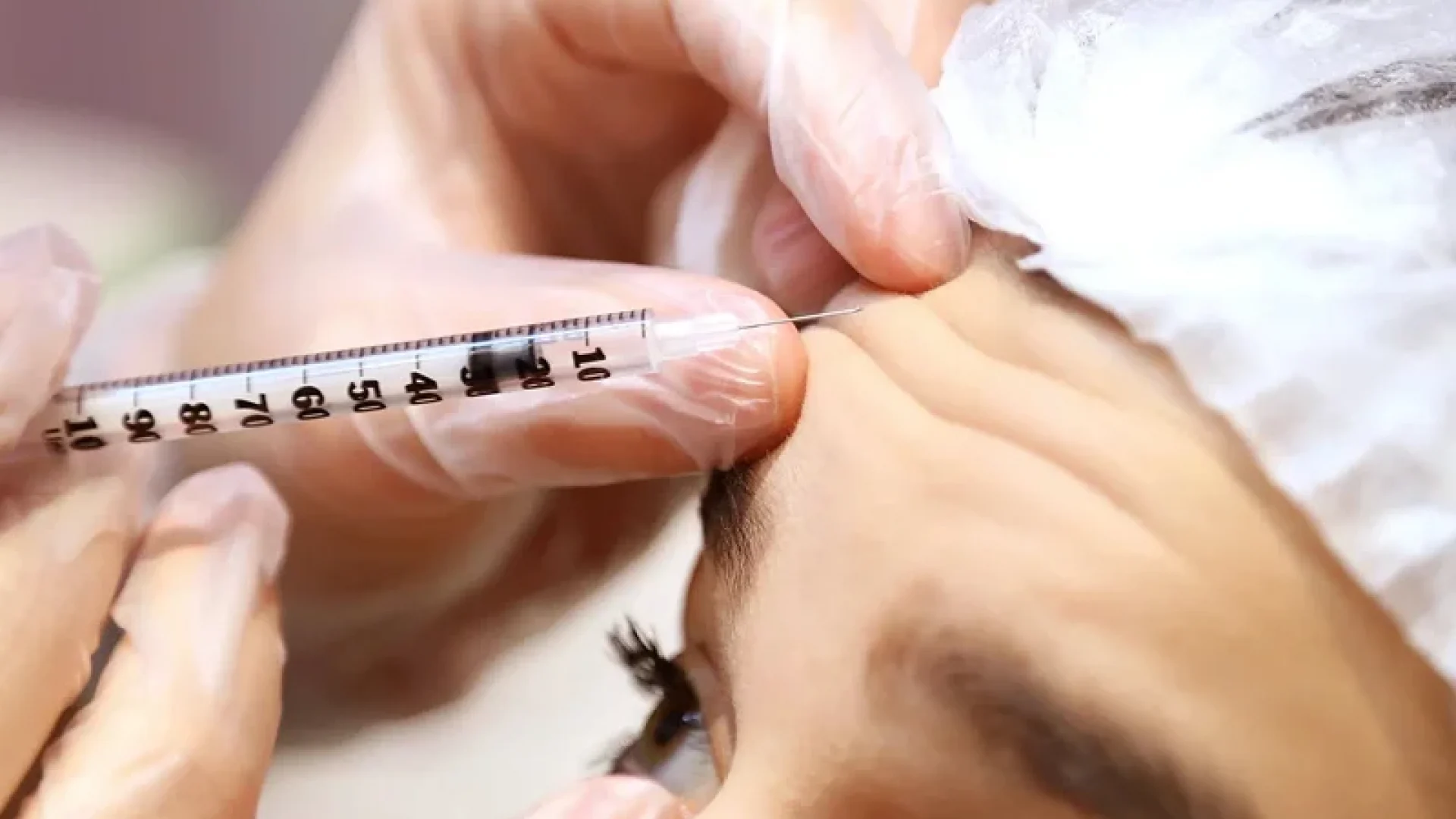
The short answer: Botox isn’t instant. Most people spot the first subtle changes within a few days, and in clinical testing the effect on frown lines began around two days after injection. Full results settle in by about two weeks and typically last three to four months. Your exact timeline depends on the area treated and your own body.
If you’ve just had Botox, or you’re booked and quietly counting down, the question I hear more than any other is some version of “when am I going to see this?” It’s completely normal to check the mirror the next morning half-expecting a new face looking back. I tell every client the same thing I’ll tell you here: Botox works gradually, not overnight, and that slow build is exactly how it’s meant to go.
Below is the real timeline after a Botox treatment, from day one to your two-week peak, plus what moves the needle, what doesn’t, and when to give me a call.
The Botox timeline, day by day
Here’s the pattern most of my clients follow. Read it as a general path, not a stopwatch.
| When | What’s happening |
| Day 1–2 | The injection sites may look a little pink or feel slightly tight. No visible smoothing yet, and that’s fine. |
| Day 3–5 | The first real softening starts to show for most people. |
| Day 7–10 | Results keep maturing and deepening. |
| Day 10–14 | Your full, settled result. This is what you’ll live with. |
The two points I’d stand behind are the ones the research backs: the first effects on frown lines have been measured at about two days after injection, and the full result lands by roughly two weeks. Everything in between is a gradual smoothing, not a switch flipping. In my own chair, I usually see crow’s feet and frown lines relax a touch sooner than the forehead, though everybody’s a little different.
What affects how fast Botox works
A few real things nudge your timeline one way or the other. The dose and how precisely it’s placed near the muscle’s nerve endings influence how quickly it takes hold. Botox also does its best work on dynamic wrinkles, the ones that show up when you move: the lines from frowning, squinting, and lifting your brows, rather than the creases that sit there when your face is at rest. And if you’re a regular, repeat treatment over time can make results last longer as the muscle gets used to relaxing.
Does Botox work immediately? Why it takes a few days
No, and it helps to understand why. Botox works by blocking the release of acetylcholine, the chemical messenger your nerves use to tell a muscle to contract. Cleveland Clinic puts it plainly: it blocks the nerve signals so the treated muscle can’t tense up. But that hand-off isn’t instant. It takes several days for the treatment to affect enough of the muscle’s signalling process before the muscle relaxes and the skin above it smooths out.
Can you make Botox work faster?
Not really, and I’d be cautious about anyone who promises you can. There’s no reliable at-home trick to speed up how fast Botox kicks in. The things that matter are a skilled injector and a little patience, so book with enough runway (more on timing in a minute) and let it do its work.
How long do Botox results last?
Once it’s fully settled, most people enjoy their results for about three to four months before the muscle gradually wakes back up and movement returns. That’s your cue to rebook. First-timers sometimes find that first round fades a little sooner, which is completely normal, and with consistent treatment, results often stretch a bit longer over time.
Botox vs Dysport: how fast does each one work?
We offer both Botox treatment and Dysport treatment, and plenty of clients ask which one works faster. In truth, they’re close, and the research doesn’t crown a clear winner on speed. Here’s how each one reads on its own label:
| Product | Onset | Duration |
| Botox | Around 2 days in testing | About 3–4 months |
| Dysport | Median 2–3 days, some as early as day 1 | Up to about 6 months in studies |
Botox’s onset comes from a clinical onset study and its duration from the FDA label; Dysport’s onset is from its FDA prescribing information and its longer duration from a peer-reviewed review. One thing to keep in mind: the two are dosed differently, so Dysport uses more units than Botox for the same frown-line area, and the numbers on your chart aren’t a straight comparison. Which one suits you comes down to the area, your anatomy, and your goals, and that’s a conversation we’ll have at your consult.
When should I get Botox before a wedding or big event?
This is the timing I really want you to nail. Because the full result takes about two weeks, book your appointment two to three weeks before the big day. That gives the Botox time to settle completely and leaves a cushion for a quick touch-up if we want to fine-tune anything. If you’re planning around a wedding, I walk through the whole runway in my guide on when to start treatments before your wedding.
Why isn’t my Botox working yet?
If you’re a few days out and not thrilled, take a breath. A handful of things are usually behind it:
- It might just be early. If it hasn’t been a full two weeks, you’re not looking at the finished result yet.
- Your lines might be static, not dynamic. Botox softens wrinkles that come from movement, but it won’t erase deep lines that sit there at rest. Those tend to respond better to a dermal filler treatment, which restores volume rather than relaxing muscle.
- Placement and dose matter. Where and how the product is injected changes the outcome, which is exactly why an experienced injector is worth it.
- Rarely, resistance. In a small number of people who get frequent, high-dose treatments, the body can build antibodies that blunt the response, though that’s uncommon and still debated.
If you hit the two-week mark and you’re still not happy, that’s what your follow-up is for. Come see me.
How to get the best results: aftercare for the first 24 hours
What you do right after matters nearly as much as the injection itself. My short list:
- Don’t rub or massage the treated area, stay upright for a few hours, and skip strenuous exercise for the first day. This keeps the product exactly where I placed it.
- Ease off alcohol, blood thinners, and anti-inflammatories around your appointment. Alcohol and blood-thinning medications raise your risk of bruising, and steering clear of unnecessary blood thinners helps keep bruising down. Never stop a prescribed blood thinner without checking with your doctor first.
- Skip the sauna and hot yoga for a day.
You’ll find my full Botox aftercare instructions here.
Is Botox safe, and who performs it at JLUXE?
Botox has a long, well-studied track record when it’s placed by a trained, licensed professional. It’s FDA-approved for frown lines, crow’s feet, and forehead lines, and as of 2024 it’s also approved for platysma (neck) bands. At JLUXE, I perform every Botox treatment myself. I’m Jen DeMarco, a board-certified family nurse practitioner, and I bring an operating-room background and an evidence-first mindset to every plan I build. Results vary from person to person, so I won’t ever promise you a specific outcome. What I will promise is a careful, personalized one.
Frequently asked questions
Does Botox work immediately? No. Botox needs a few days to block the nerve signals that move your muscles. Most people notice the first subtle changes within a few days, with the effect on frown lines measured at around two days in clinical testing.
How long does Botox take to fully kick in? Full results usually appear by about two weeks. The smoothing builds gradually over those first 10 to 14 days, so wait the full two weeks before you judge your result.
Can I speed up my Botox results? There’s no proven way to make Botox kick in faster. The real levers are an experienced injector and a bit of patience. Be skeptical of any product or trick that claims to accelerate your results.
How do I know if it’s working? You’ll notice it’s harder to fully make certain expressions, and the lines from those movements start to soften. Since Botox blocks the muscle-contraction signal, reduced movement in the treated area is the first sign it’s taking hold.
How long does Botox last? For most people, about three to four months. After that, movement gradually returns and it’s time to rebook. Consistent treatment can help results last a little longer over time.
How soon before an event should I get Botox? Two to three weeks ahead. That lets your results fully settle and leaves room for a touch-up if needed. Booking the week of your event is cutting it too close.
Why don’t I see results after a week? Most likely it’s simply too soon, since full results take about two weeks. Deep lines that sit at rest also respond less to Botox than movement lines do. If you’re still unhappy at two weeks, book a follow-up.
Book your Botox consultation in Willoughby, OH
Curious whether Botox is right for you, or when to schedule around an event? Let’s talk it through. You can book a consultation online, and if you’d like to see real results first, take a look at our Botox before and after gallery.
JLUXE Aesthetics 4212 State Route 306, Building 2, Suite 300, Willoughby, OH 44094 (440) 295-5866
This article is for general education and isn’t medical advice. Botox is a prescription treatment, and results vary from person to person. Talk with a licensed medical provider about what’s right for you.
References
- Botox onset study, ClinicalTrials.gov (NCT00856414): https://clinicaltrials.gov/study/NCT00856414
- Onset and full-effect timing; dynamic vs static wrinkles, American Family Physician (2026): https://www.aafp.org/afp/2026/0500/botulinum-toxin-procedures
- Botox duration and FDA-approved areas, FDA prescribing information / DailyMed: https://www.accessdata.fda.gov/drugsatfda_docs/label/2024/103000s5316s5319s5323s5326s5331lbl.pdf and https://dailymed.nlm.nih.gov/dailymed/drugInfo.cfm?setid=485d9b71-6881-42c5-a620-a4360c7192ab
- Mechanism, aftercare, alcohol/blood-thinner bruising risk, Cleveland Clinic: https://my.clevelandclinic.org/health/treatments/8312-botulinum-toxin-injections
- Why onset takes days; dose and placement, peer-reviewed timing review: https://pmc.ncbi.nlm.nih.gov/articles/PMC4658210/
- Repeat treatment and longevity, American Academy of Dermatology: https://www.aad.org/public/cosmetic/wrinkles/botulinum-toxin-faqs
- Dysport onset, FDA prescribing information: https://www.accessdata.fda.gov/drugsatfda_docs/label/2023/125274s125lbl.pdf
- Dysport duration (up to ~6 months), peer-reviewed review: https://pubmed.ncbi.nlm.nih.gov/39196827/
- Botox vs Dysport dosing differences, peer-reviewed neurotoxin-content study: https://pmc.ncbi.nlm.nih.gov/articles/PMC6316182/
- Antibody resistance and 2024 platysma approval, peer-reviewed real-world study: https://pmc.ncbi.nlm.nih.gov/articles/PMC12634149/
- Bruising prevention, peer-reviewed complications review: https://pmc.ncbi.nlm.nih.gov/articles/PMC12865869/