

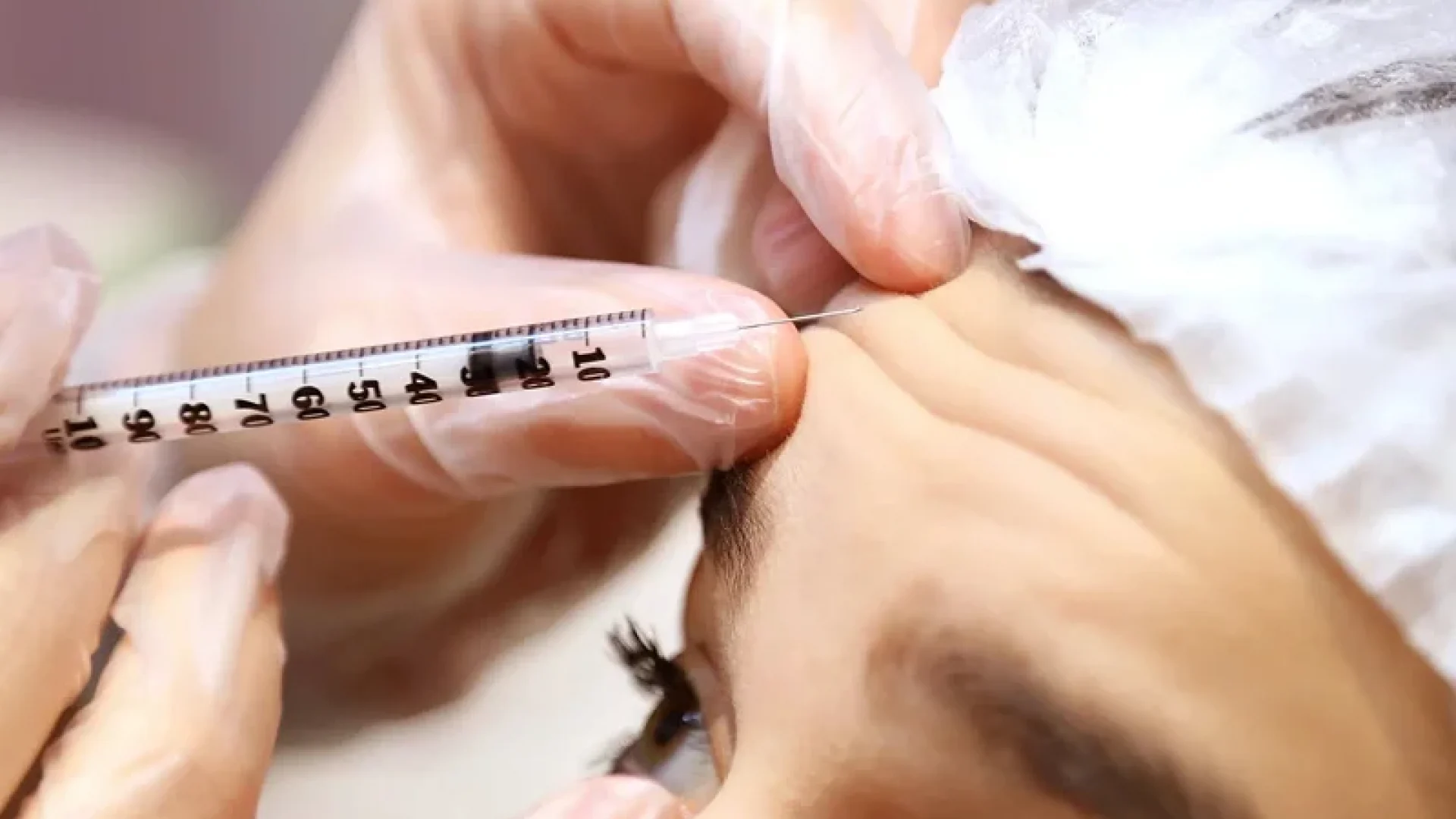
Ask the internet what to avoid after Botox and you’ll get a pile of lists that all sound certain and don’t quite agree. One says stay upright for four hours. Another says just don’t sleep face down that first night. A third adds a heart rate limit for your workout. None of them mention where the numbers came from, which turns out to be the part worth knowing.
What should you avoid after Botox?
For the first day: skip the gym for 24 hours, don’t rub or press the treated areas, and stay upright for the first four hours. Those rules protect your results. Separately, and for much longer than a day, watch for muscle weakness, vision changes, or trouble swallowing or breathing, and get medical help right away if any of those appear.
Those are two different lists doing two different jobs. The first is aftercare, from your injector. The second is safety, from the FDA-approved labeling. Almost every article you’ll find covers the first and never reaches the second.
The aftercare rules we give our patients
Ours is a short list, published openly on our botox treatment page.
Don’t rub, press, or massage the treated area
That covers the obvious things, like a face massage. Absent-minded touching is the harder part, so plan for it.
Don’t lie down for the first four hours
Four hours from the injection, not from when you get home.
Skip the gym for 24 hours
One day off.
So where do these numbers come from?
The FDA-approved Medication Guide for BOTOX and BOTOX Cosmetic (onabotulinumtoxinA), revised October 2024, contains a section headed “What should I avoid while receiving BOTOX or BOTOX Cosmetic?” There is exactly one instruction in it, and we’ll come to it shortly. What’s not in it is exercise. Or massage. Or lying down, or alcohol, or skincare, or any of the other items that show up on every aftercare list online.
That doesn’t make the four-hour rule wrong, and we’re not suggesting you ignore it. It makes it convention rather than regulation. Which is also why the same rule turns up in slightly different form from one practice website to the next, each version stated with equal confidence and none of them citing anything.
So follow the instructions from the person who actually injected you. They know the dose, the placement, and you.
What the FDA labeling does tell you to avoid
One FDA precaution that is relevant to aftercare involves symptoms that may affect your ability to perform certain activities safely. Although uncommon, some patients may experience muscle weakness, dizziness, or vision changes following treatment.
If you notice any of these symptoms, contact your injector or healthcare provider promptly for guidance.
The key takeaway is not that these effects are expected after treatment, but that they should be taken seriously and discussed with your provider if they occur.
Don’t start a new medication without mentioning the Botox
The Medication Guide is unusually blunt here: do not start any new medicines until you have told your doctor that you have received BOTOX or BOTOX Cosmetic. It specifically flags muscle relaxants, antibiotics given by injection, allergy and cold medicine, sleep medicine, and anti-platelet or anticoagulant products, and it also advises keeping a list of your medicines to show your doctor and pharmacist each time you get something new.
Easy to do, easy to forget. Your dentist and your primary care doctor both count.
Attend Your Two-Week Follow-Up Before Planning Future Treatments
Strictly speaking the label doesn’t forbid this. What the Medication Guide says is that it is not known whether BOTOX Cosmetic is safe and effective for use more than once every three months. The prescribing information puts it the same way, noting that dosing more frequently than every three months has not been clinically evaluated.
If your results fade faster than that, tell us rather than booking early.
Don’t get a different toxin product somewhere else in the meantime
The prescribing information states that the effect of administering different botulinum neurotoxin products at the same time, or within several months of each other, is unknown, and that excessive neuromuscular weakness may be worsened by giving another botulinum toxin before the previous one has resolved.
So if a promotion for a different brand catches your eye soon after, ask first. It’s also why the Medication Guide wants your doctor to know exactly which product you’ve had, by name.
When to Contact Your Provider
Mild redness, swelling, bruising, tenderness, or headache can occur after Botox and typically resolve on their own. However, contact your provider if you experience symptoms that seem unusual or worsen over time.
Although serious complications are uncommon, seek medical attention right away if you experience difficulty breathing, difficulty swallowing, significant muscle weakness, or vision changes following treatment.
If you have questions about your recovery or are unsure whether a symptom is normal, your injector can help determine the appropriate next steps.
Don’t judge the result on day two
Botox takes time to show up, and much of the worry we field comes from people assessing themselves too early.
Here’s how the prescribing information describes it. The initial dose typically begins working on the injected muscles one to two days after injection, and builds in intensity through the first week. For glabellar lines it puts the duration of effect at roughly three to four months. Our botox treatment page gives the same three-to-four-month duration, and puts visible results at three to five days, with Dysport tending to arrive a little faster at two to three days.
So if there’s still visible asymmetry once onset has fully happened, call us rather than guessing at it. Two days in, though, you’re mostly just watching it arrive.
Where not to get injected in the first place
Technically a before question. It’s here because it decides whether any of the rest applies to you.
CDC, the FDA, and state and local health departments investigated a cluster of harmful reactions following botulinum toxin injections, closing that investigation in June 2024. Those cases involved counterfeit products, products from unverified sources, or people who weren’t following state or local requirements. Some of those affected were hospitalized, and some were treated with botulism antitoxin. CDC has since documented severe illness in people who bought botulinum toxin online and injected it themselves.
CDC guidance leaves no room for interpretation. Only get botulinum toxin injections if the product comes from an authorized supplier and the provider is licensed and trained to administer it. Ask whether the product is FDA approved and where it came from. And if you’re in doubt, in the CDC’s own words, don’t get the injection.
Frequently asked questions
How long after Botox am I in the clear?
There isn’t a clean cutoff. The FDA states serious side effects can happen hours, days, to weeks after injection. Aftercare restrictions are measured in hours. Paying attention to how you feel should run much longer than that.
Can I get Botox and dermal filler at the same appointment?
The FDA states on its dermal fillers page that safe use of fillers in combination with neuromodulators or other treatments has not been evaluated in a controlled clinical study. That’s an argument for one provider managing both your Botox and your dermal fillers, rather than splitting them across practices that never compare notes.
Is a drooping eyelid normal?
Drooping eyelids, or ptosis, appear twice in the Medication Guide: once among the possible side effects and once among the symptoms of toxin spread. Because it sits on both lists, don’t talk yourself out of it at home. Call your injector.
Ask us the uncomfortable questions
Aftercare is the easy part. Where the product came from, who’s holding the syringe, what to do at two in the morning if something feels off: those are the questions that matter, and any practice worth going to answers them without getting defensive.
You can book an appointment with our team in Willoughby, Ohio, or contact us first if you’d rather just talk it through.
This article is for informational purposes and is not medical advice. Follow the aftercare instructions given by the provider who treated you, and seek immediate medical care for difficulty swallowing, speaking, or breathing.